
Thoughts · Natural Frequencies
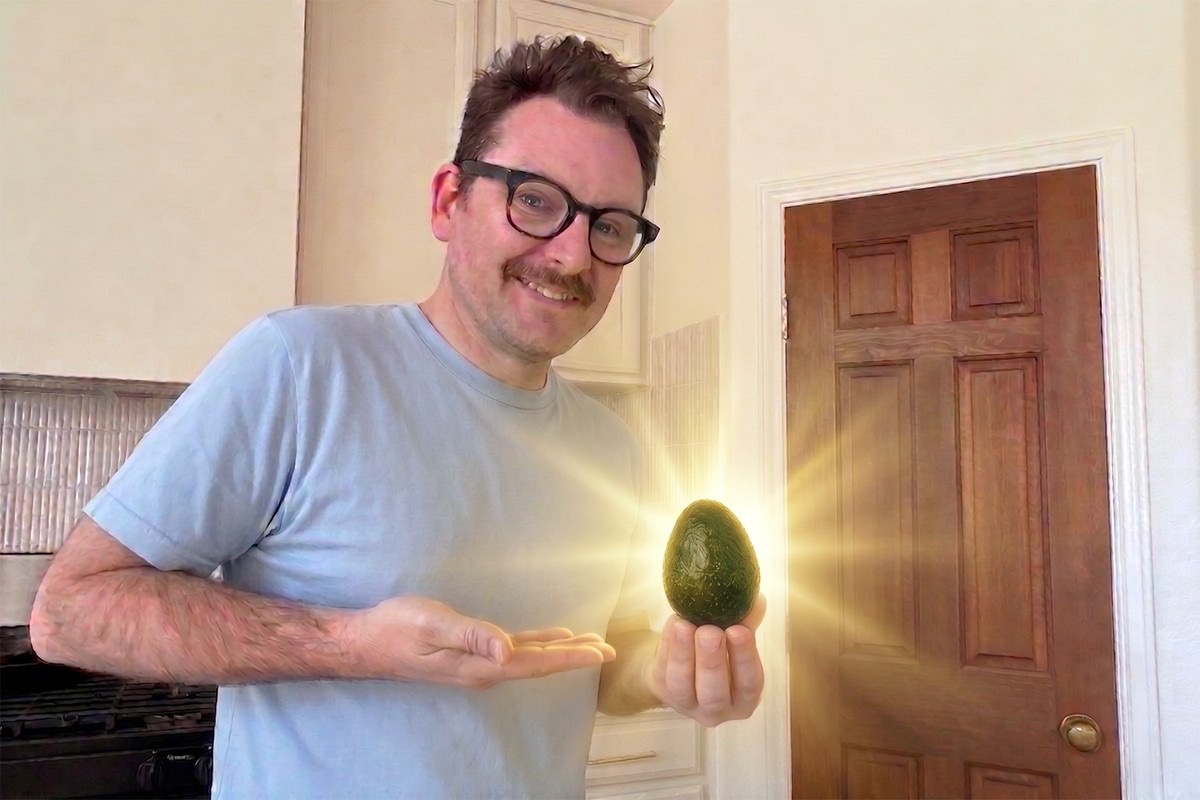
The most important avocado in the world
I needed to spend thirty more cents to get free overnight shipping. So Amazon gave a single little avocado its own refrigerated escort to my door.
Something to buy… tap, tap, tap
My Amazon cart came to twenty-four dollars and sixty-seven cents for the two things I was trying to buy. Then at checkout, a little bar appeared, telling me I needed to add at least 30 cents to the cart to get my items tomorrow.
I didn’t need anything else, and I didn’t want to spend any more money at all, but I did want to get my order ASAP. So I was wondering what would be the cheapest thing I could add to the cart that I’d actually use. Helpfully, Amazon started showing me produce; somewhere in the Whole Foods merger, groceries had become something you could add to a shipment of phone chargers. So I added one medium Hass avocado (interestingly to me, a fruit sometimes referred to as an alligator pear). I already had avocados at home, so I didn’t need this one—but I figured it would get eaten. I clicked the button, felt a little clever… and a bit silly. Who orders one avocado?
The two non-food things I ordered came the next morning in a box. And then, a couple hours later, the avocado arrived on its own, in an insulated Prime paper bag, with two frozen water bottles inside to keep things chilled, and one lone avocado in a thin plastic produce bag sitting in the middle of all that delivery engineering. The bag could have held forty of them. The sticker read Avocados from Mexico, 4046, the code for a completely ordinary medium Hass. But inside was just one very special, precious little avocado.
One fruit’s epic voyage
The ceremony didn’t start at the Amazon warehouse. This avocado came from Michoacán, which grows roughly four out of every five of Mexico’s avocados, which are in turn most of the avocados Americans eat. It was almost certainly picked by hand and packed within hours, then kept cold the entire way north, riding in refrigerated trucks held at a steady forty-something degrees the whole trip to keep it from ripening or bruising gray from being frozen. It crossed the border at Laredo or Nogales, through an inspection system so involved that Mexican avocados were effectively shut out of this country for the better part of a century before the agreements got sorted in the nineties. By the time it reached its shelf, this fruit had already traversed one of the most precise supply chains on the planet.
All of that is genuinely amazing. Kind of mind blowing when you think about what it takes to get a flawless avocado from another country at any time of the year. It’s the kind of small coordination miracle I like to take note of in my day-to-day.
But then even after its harrowing journey from the tree to a refrigerated warehouse, the logistics company named after a jungle and that started as an online “bookshop” decided the most sensible way to get one avocado from across town to my house involved a cooler, two ice bottles, and an afternoon of someone’s time. I felt a little bad about it (how much extra energy was being used to carry one avocado I didn’t even need?), not that it all went to waste, since a person got paid to make the drive and I would ultimately eat it, but the trade still felt funny to me. The trip from Mexico is a marvel, but the trip from the warehouse to my door just seems wrong.
How is this possible?
So standing there with it, I kept doing the math. Whatever Amazon charged me for the avocado was a rounding error next to what the trip cost them: the bag, the bottles, the fuel, the slice of a driver’s day, all of it to move one piece of fruit across town. Nobody does that by accident, but they were losing money on it on purpose.
The avocado’s delivery was a loss leader. Amazon ate the cost the same way a grocery store sells a staple that everyone needs at below its cost to get customers through its doors. What Amazon is paying for isn’t the avocado. Instead, it’s the promise and habit: the ability to reach for my phone the next time I need a single avocado, and the time after that, until ordering one piece of produce from a website feels as ordinary as breathing. A loss leader only works if you can measure what it wins and afford what it costs, which is why the giant can run a play the corner store never could. The corner store would go broke being this nice to me.
Nerdy aside: a fruit DDoS
So that got me thinking. If one avocado costs Amazon this much to deliver, the whole arrangement seems wildly vulnerable. People boycott Amazon all the time: for politics, for wages, for the mom and pops it’s competing out of business… but a boycott asks everyone to stop buying, go quiet and hope the absence adds up to something the company can feel. But what if we did it in reverse? What if—on one chosen afternoon—a few million people each ordered a single avocado, all set for same-day delivery at the same time? Kind of a flash mob of produce delivery. It’d be a real-world hack… a DDoS (distributed denial of service) attack, but the data packets are actually avocados and the server is the warehouse and its fleet: a finite number of drivers asked to make a few million separate trips, each one carrying a single insulated paper bag, until the whole thing completely buckles. Whoa.
I have no plans to organize this, but I feel like boycotts are self-defeating and this is a different approach that could actually accomplish something notable. Amazon’s higher-ups would freak out and the media would eat this up. Pun intended.
It is finished
The avocado, meanwhile, was still on my counter top, sitting like something precious. Hand-picked, temperature-controlled, escorted, insulated, delivered under its own cover like a document that mattered. And it worked on me. It sat untouched for two days because my fam had developed a respect for it due to its adventure, and nobody could bring themselves to mash up something that had traveled like that. It had been handled with so much care that eating it felt a little rude.
But we ate it eventually. If a system is going to treat one ordinary piece of fruit like the most important avocado in the world, the least I can do is not waste it. It was delicious.
How this was made
| Layer | George | AI |
|---|---|---|
| Concept | 95 | 5 |
| Direction | 90 | 10 |
| Research | 70 | 30 |
| Structure | 55 | 45 |
| Voice | 80 | 20 |
| Wording | 50 | 50 |
| Authorship | 86 | 14 |
- Foundation reliance
- 60 → −18% applied to AI
- Foundation used
- Voice and style rules, Natural Frequencies project context, prior conversation history
- Confidence
- High
How the score works: Who wrote this, really?
Get on the list
Get Natural Frequencies delivered to your inbox directly. Unsubscribe anytime.
What are you working on?
Let’s chat about what you’re making and where you need support. If I can help, we’ll chat about how. If I’m not a good fit, I’ll let you know.
15 minutes to see if we’re a fit.